How to Care for Bohemian Braids Without Tangling the Curly Hair: 12 Tips That Actually Work
For a moment, I'll write from a client's perspective.
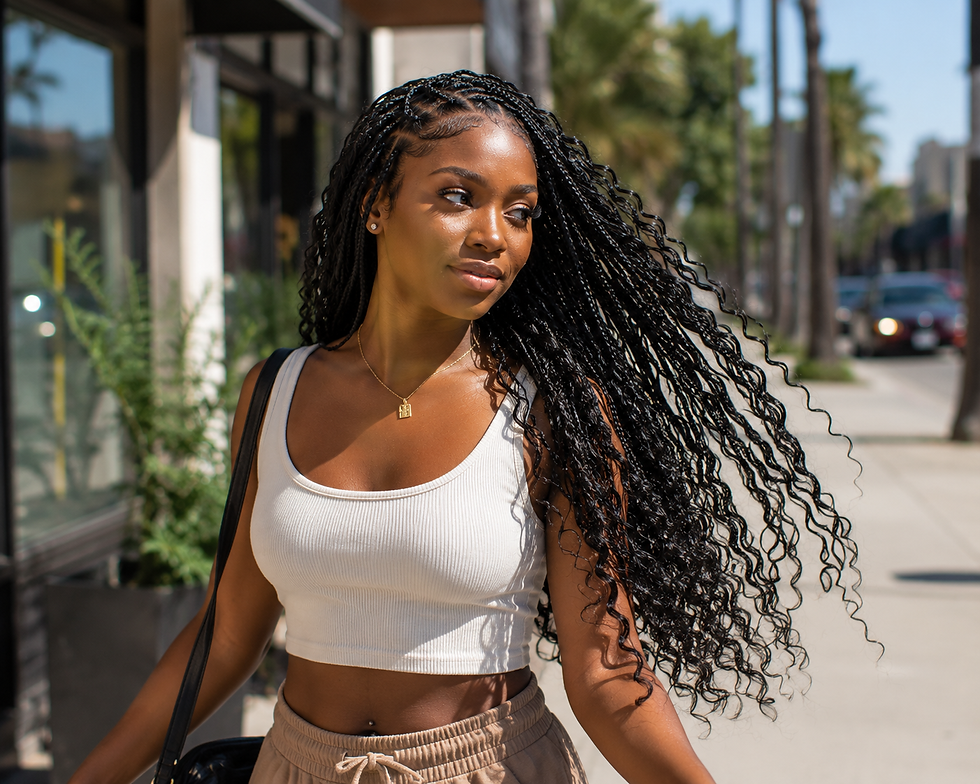
Let's be honest. You didn't choose bohemian braids intending to spend your Tuesday night carefully unpicking each hair knot as if you were defusing a bomb. You picked them because they're beautiful, with that loose, wavy, effortlessly undone look that communicates "I woke up like this," even though you, in fact, did not. Bohemian braids require little maintenance and are the style everyone believes is completely immune to time-consuming upkeep. And that's precisely where the problem begins.
Here's the thing nobody tells you at the salon chair: those beautiful curly pieces that make Bohemian braids so distinct are also the exact reason they tangle. Curl pattern plus friction plus time equals a texture nightmare if you don't know what you're doing. I've been there, three weeks into a fresh set, staring at the back of my head in two mirrors like I'm about to solve a puzzle with no edges.
The good news is that tangling isn't something that has to happen. It's mainly a matter of maintenance, and maintenance issues can be solved. This guide will cover everything you need to know. What you should know before you even sit in the chair, the daily routines that help keep the curls loose and in good condition, and the errors that cause the nice bounce you have in week one to turn into chaos by week three, without any unnecessary stuff, without any filler, just the things that actually work.

What to Know Before Getting Bohemian Braids
Let's go back a bit before we get to the care routine. Much of the trouble people have stopping their boho braids from tangling begins well before the braids are even put in place. Prevention is always better than making corrections.
The hair type matters more than you'd think. Bohemian braids typically combine a braided base with loose, curly extension hair left out to blend with your natural texture. If your stylist uses low-quality synthetic curls, you're basically fighting a losing battle from day one. That hair tangles faster, dries out quicker, and doesn't hold its curl pattern nearly as long.
Boho Braids With Human Hair vs. synthetic hair is a real decision, not a minor detail. Human hair curls behave far more like your natural hair. They respond to moisture, they can be lightly heat-styled to refresh the curl, and they tangle significantly less over time because the cuticle structure is smoother and more consistent. Synthetic curls are cheaper and often more readily available, but they mat faster, especially with friction from sleeping or scarves. If tangle prevention is your top priority, human hair is worth the extra cost.
The way your braids are installed affects your whole experience; if they are put in too tightly, you're not only risking headaches and stress along the hairline, but also causing the loose curls to rub against one another more vigorously and speed up tangling. Ask your stylist for something comfortably snug rather than painfully tight.
Curl size and density affect maintenance load. Thicker, more densely packed curls look incredible in photos, but they also mean more surface area for strands to tangle with each other. If this is your first time with Bohemian braids and you're nervous about upkeep, ask your stylist about slightly looser curl distribution. It looks just as beautiful, and it's genuinely easier to manage.
Why Do Boho Braids Tangle in the First Place?
Allow me a brief diversion in science; promise it'll be short. Hair becomes tangled when the outer layer, namely the cuticle, is damaged. Each hair strand is made up of thousands of these small, overlapping, scale-like layers, and when they are smooth and lying flat, the hair slides easily past other hair. But when the layers lift or are damaged by friction, dryness, or rough treatment, the strands stick to one another like Velcro.
Curly hair is already more prone to this because of its shape alone; the twists and turns in the curl pattern create more contact points than straight hair does. Add in extension hair (which doesn't get the natural oils your scalp produces) and you've got the perfect recipe for knots. Understanding this is honestly half the battle, because once you know why it happens, the how to prevent it part makes way more sense.
1. Moisturize the Curls Daily, But Don't Drown Them
This is the greatest game-changer for Boho Braid Maintenance, without a single exception. Dry hair is prone to friction. To put it in this way, dry curls tend to catch, snag, and knot, like a dry hinge making a squeaking sound, as opposed to one that has been well oiled. Curls that have been moisturized, on the other hand, slide past one another.
The key is to get the balance right: if you don't apply enough moisture, then you're back where you started; but if you use too much product, you end up with a build-up that weighs the curls down and makes them more susceptible to matting at the root of each curl.
A light, water-based leave-in spray, paired with a little curl cream or a light oil, is generally the best choice. Apply the product to the curly ends, not the braid base, since the braid base doesn't need as much daily moisture as the loose curls do.

2. Sleep on Satin or Silk Every Single Night
I cannot stress this one enough. Cotton pillowcases are basically sandpaper for your braids. Instead, use a satin or silk pillowcase, or, if possible, cover your hair with a satin bonnet or scarf when you go to bed. For some people, a loose braid with a satin lining or an updo in the pineapple style (with the curls loosely gathered on top of your head) is even more effective because it reduces how much the curls move during sleep. Just this one habit alone can extend the length of time your braids remain untangled by days, or in some cases by weeks. Curls move around during sleep. This one habit alone can add days, sometimes weeks, to how long your braids stay tangle-free.
3. Don't Skip Wash Day, But Do It the Right Way
Many people avoid washing their Bohemian braids for fear it will lead to tangling. Although this is understandable, it is actually the wrong approach; buildup, comprising sweat, product residue, and dirt, causes more tangling than water does when you wash properly.
Here's how to do it without turning your braids into a bird's nest:
Dilute your shampoo with water in a spray bottle for gentler, more even distribution.
Focus on the scalp, gently massaging with fingertips (not nails) rather than scrubbing the length of the braids.
Let the water run through; don't scrub the curly ends; squeeze gently rather than rub.
Use a lightweight, hydrating conditioner only on the curly sections, avoiding the braided roots.
Rinse thoroughly: leftover product residue is a tangle magnet.
Wash roughly every one to two weeks, depending on your activity level and scalp oil production. Skipping it entirely for a full month is usually where things go sideways.
4. Detangle From the Ends Up, Gently and Often
One error I made at the beginning was to attack the tangle from the root by dragging a comb or my fingers all the way through the curl. That pushes the knot downward and makes it tighter. Instead, always start at the ends and work up in small sections, gently loosening the hair as you go.
A wide-tooth comb, or even just your fingers, works best for this. Skip the fine-tooth comb entirely; it's too aggressive for curly extension hair. Do a light detangling pass every few days, not just when things already look bad. Prevention in small doses beats a big rescue mission later.

5. Minimize Friction From Clothing and Accessories
This is tricky since it has no direct connection with your hair routine; things like scarves, hoodies, backpack straps, and even some jacket collars. Any items that rub against your braids repeatedly during the day will eventually cause tangling.
If you're active, wear a lot of outerwear, or work out regularly, consider:
Tying your hair back or up loosely while working out.
Choosing smoother fabric scarves over rougher wool textures when possible
Being mindful of how backpacks or bags sit against longer braids
This doesn't require you to overhaul your entire wardrobe; it just means becoming more conscious of the areas that cause repeated friction.
6. Refresh Curls Instead of Re-Curling Constantly
Whenever the curls begin to loosen or frizz, you may be tempted to take a curling iron and re-curl the entire section. But don't make that your first choice. Frequently applying heat speeds up drying, and, as we have already discussed, dry hair tends to tangle more.
Instead, try a curl refresher spray (water mixed with a small amount of leave-in conditioner in a spray bottle works fine) to revive the curl pattern without heat. Save actual heat styling for occasional touch-ups, not a daily habit. If you do need heat, use the lowest effective setting and a heat protectant spray first.
7. Stick to a Retightening Schedule
The braid base tends to become looser as new hair grows in, and since the base has become looser, there is more movement, more shifting, and yes, more tangling at the point where the braid joins the loose curl. Generally, people find that retightening it every three to four weeks keeps it looking neat and helps control tangling.
A complete overhaul isn't always necessary; in most cases, a partial retightening around the hairline and in the areas that wear most (for example, the crown if you sleep on your side) is enough to restore the hairstyle without the time and effort of a full reinstallation.
8. Protect Your Braids in the Water
Whether it's the ocean, a pool, or a long hot shower, water can temporarily alter hair texture and lead to tangles if you're not careful. Chlorine and saltwater are especially drying, which, as you've probably guessed, is due to the friction when hair dries. Before you start swimming, first wet your braids with clean water (since saturated hair absorbs less pool or ocean water) and use a little leave-in product or oil as a barrier. Then rinse them thoroughly with fresh water as soon as reasonably possible, so chlorine or salt doesn't sit and dry in the curls.
9. Avoid Over-Handling Throughout the Day
I get it, new braids are fun to touch, twirl, and show off. But repeated handling and twisting curls around your fingers, constantly running your hands through your hair, and adjusting it every few minutes actually roughs up the cuticle layer we talked about earlier. The less unnecessary manipulation, the smoother the curls stay.
This doesn't mean you can't touch your hai10. Select the Appropriate Products. Go lightweight in the morning, protect it at night, and let it be during the hours in between.
10. Choose the Right Products, Lightweight Wins
More product is not the solution to tangles. Although heavy creams, thick gels, and oil-based products may seem to help at the time, they quickly accumulate on extended hair and, in fact, draw in more lint, dust, and debris, causing matting.
Look for lightweight, water-based leave-ins and light oils like jojoba or a light argan blend. Brands like Mielle Organics, Cantu, ORS, and As I Am all make lightweight, curl-friendly lines that many people with Bohemian braids swear by. However, the right product often comes down to personal trial and error with your specific hair type and the extension hair you use.

11. Know When It's Time to Take Them Down
This is the part most people don't like to mention, but it is important. Even with perfect care, Bohemian braids have a natural lifespan, typically six to ten weeks, depending on the hair type, curl density, and how well you've maintained them. Going beyond that period, particularly when you see matting that keeps coming back and doesn't come loose when you detangle, usually causes more harm than good.
Signs it's time for a takedown:
Persistent matting that returns within a day or two of detangling, even after moisture
New growth that causes considerable root tension.
Curls that no longer respond to refresh sprays and stay frizzy or dull
Any scalp irritation or unusual itching that doesn't resolve with a gentle wash
Leaving your braids down at the right time helps protect the natural hair underneath, and it prevents a tangle nightmare.
12. Be Patient With the Learning Curve
Last one, and the most important. If this is your first time with Boho braids, give yourself some grace. Every head of hair responds a little differently, and it usually takes one full cycle. It takes time to take down before you really understand what your specific hair and curl type needs. What works for your friend's silky human-hair curls might need tweaking for your denser texture, and that's completely normal.
Keep a mental note (or an actual note in your phone, no judgment) of what worked and what didn't each time. By your second or third set, you'll have your own personal routine dialed in, and tangling will feel like a distant, mildly annoying memory instead of a weekly crisis.
Final Thoughts
Bohemian braids are one of those styles that reward a little bit of consistency with a whole lot of payoff. Nobody's asking you to overhaul your entire life around a hairstyle, ,just a few smart, small habits: keep the curls moisturized, protect them while you sleep, wash with intention, and don't be afraid to take them down when it's time. Do that, and you'll spend way less time untangling knots and way more time actually enjoying how good they look.
So go ahead, wear the braids with confidence. Grab that satin bonnet on your way to bed tonight; future you will say thanks.
Got a maintenance tip that's saved your braids from tangling? Drop it in the comments; the boho braid community always appreciates a good hack.


Comments